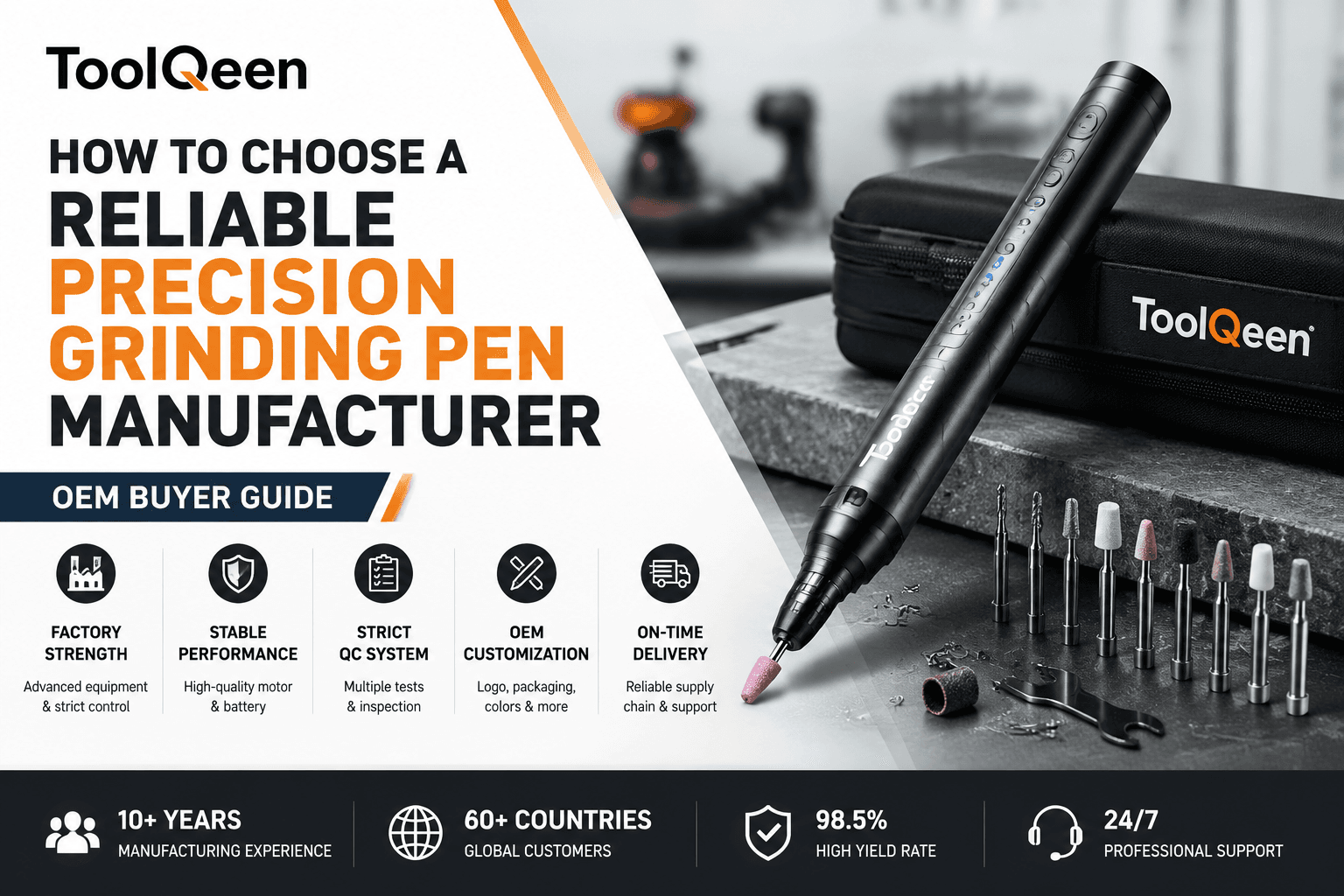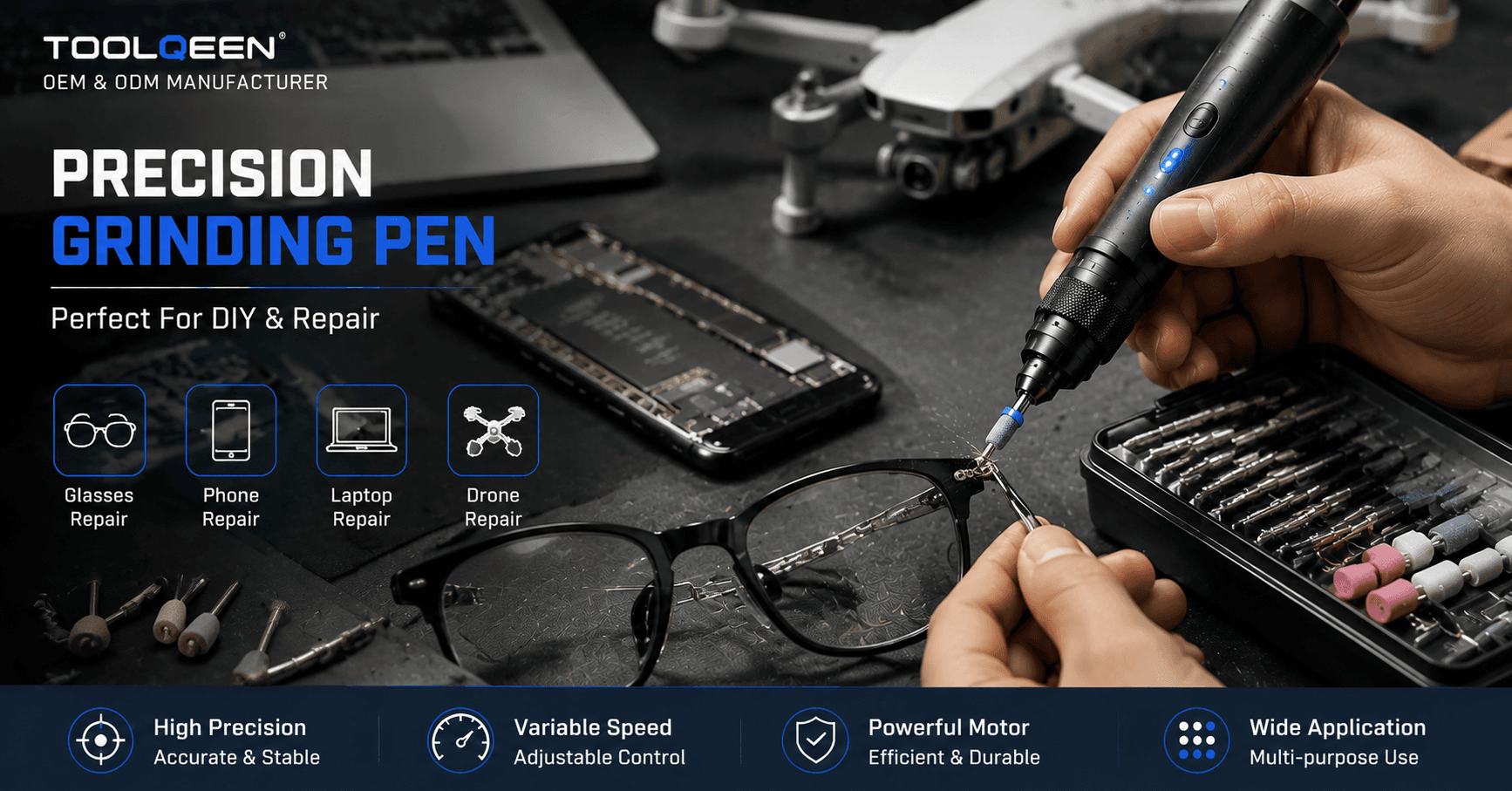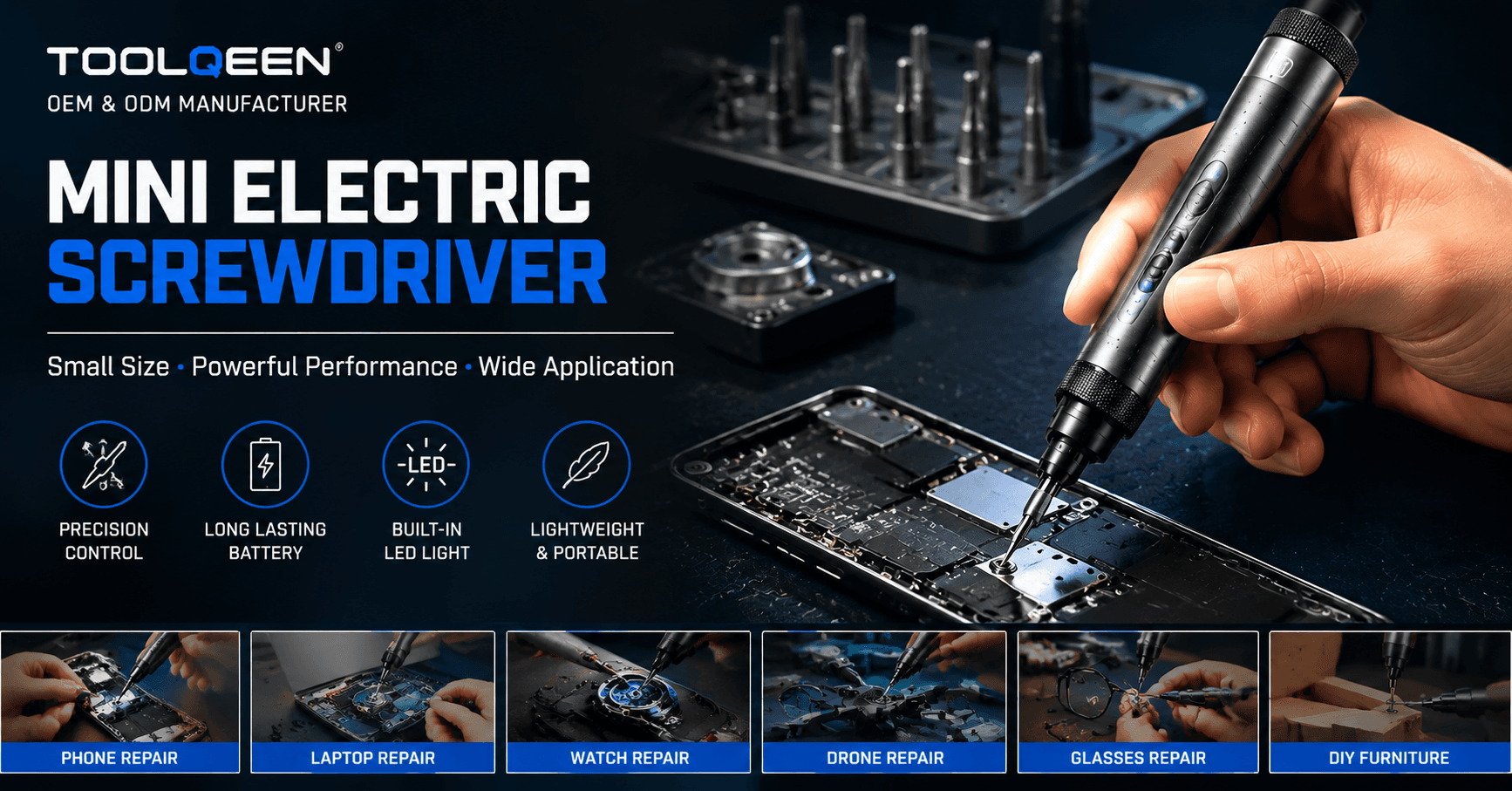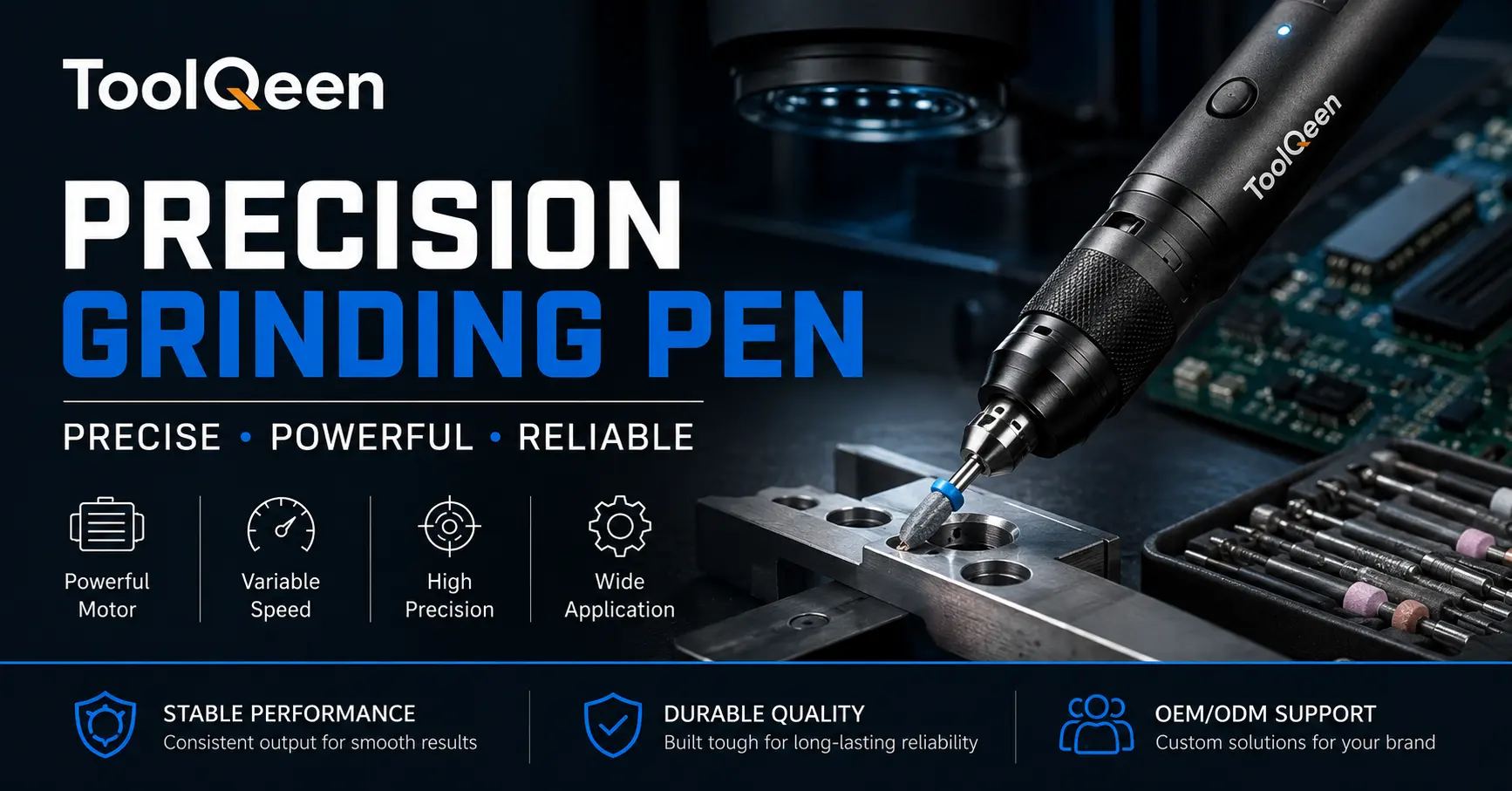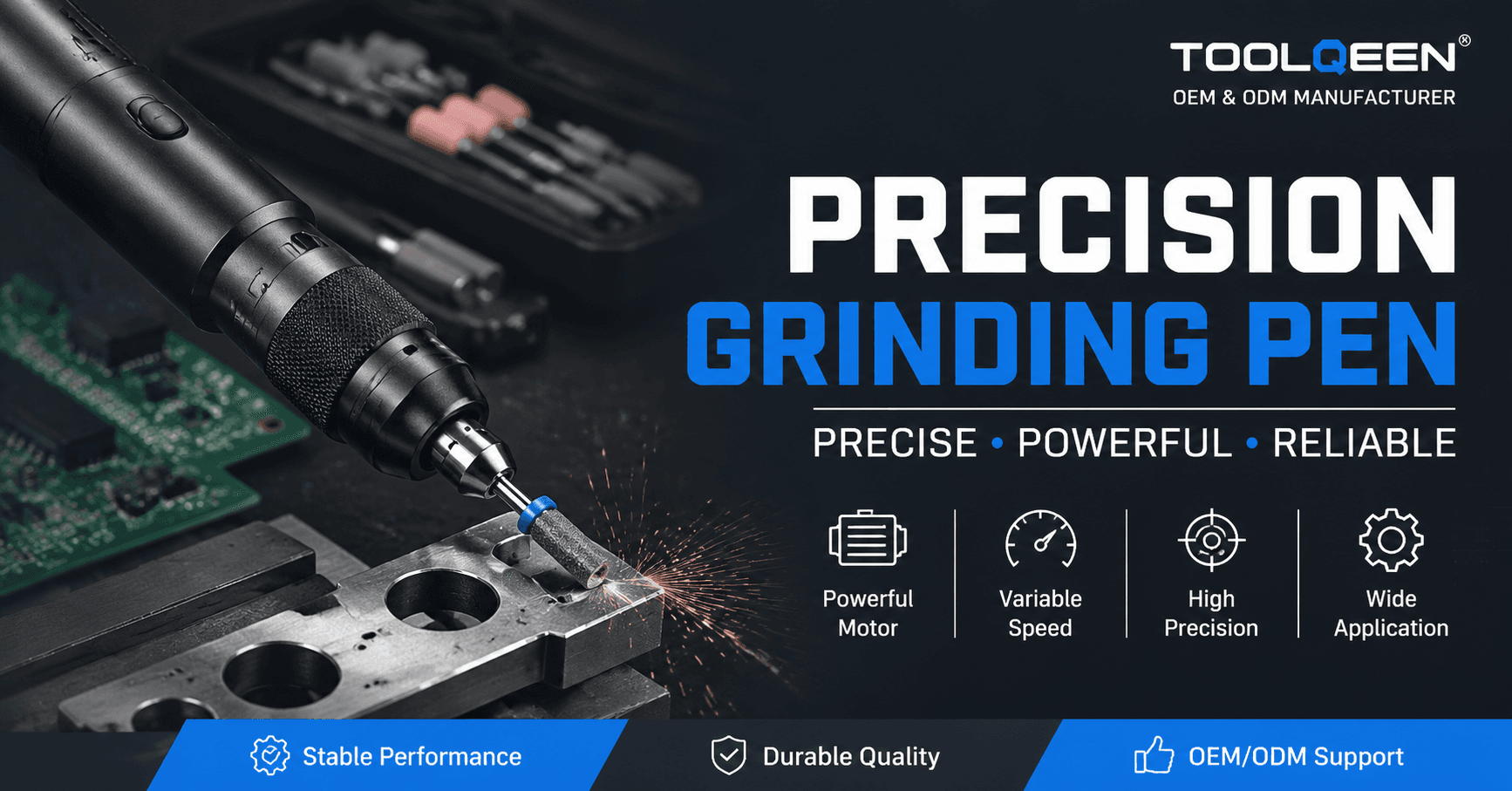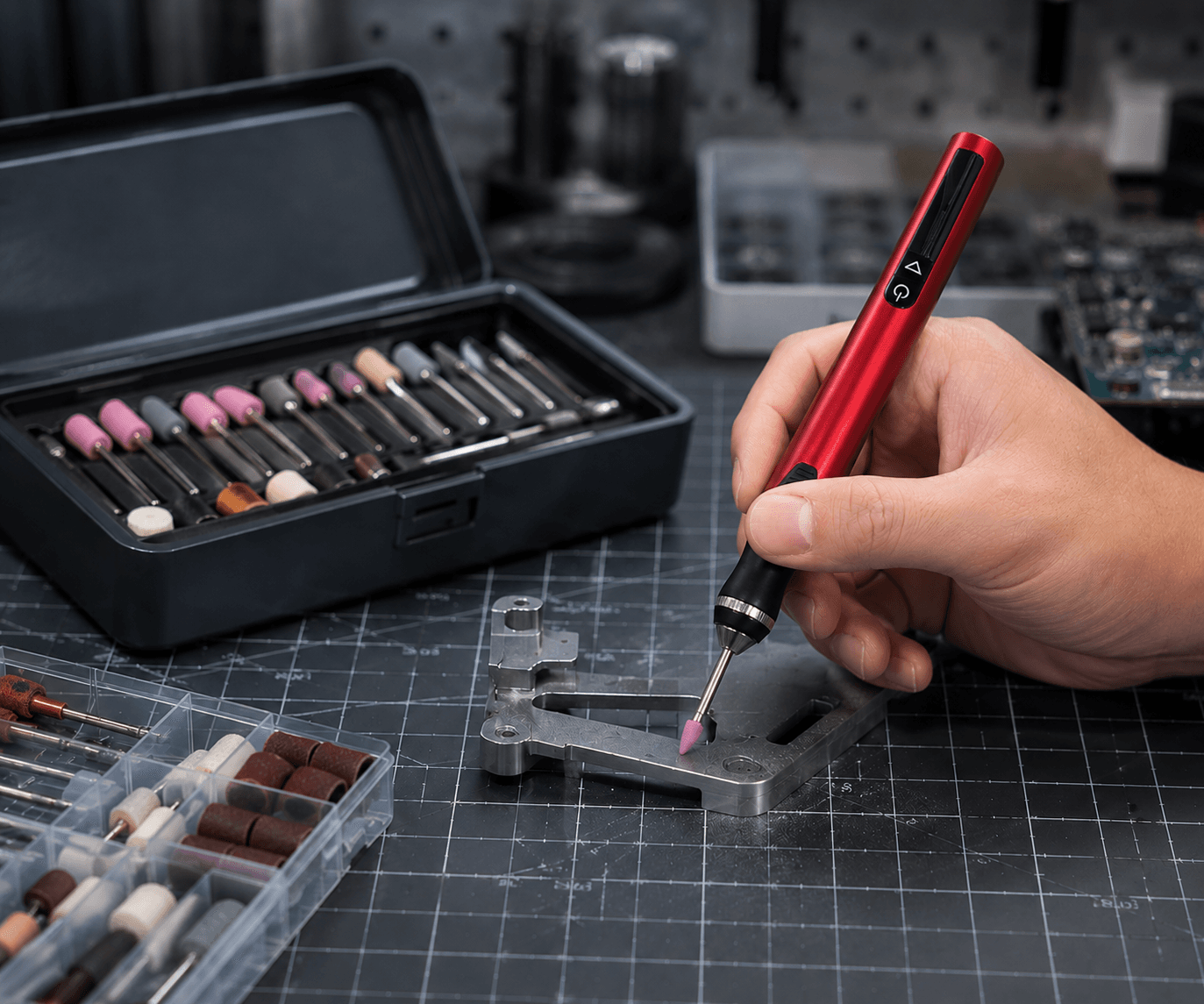

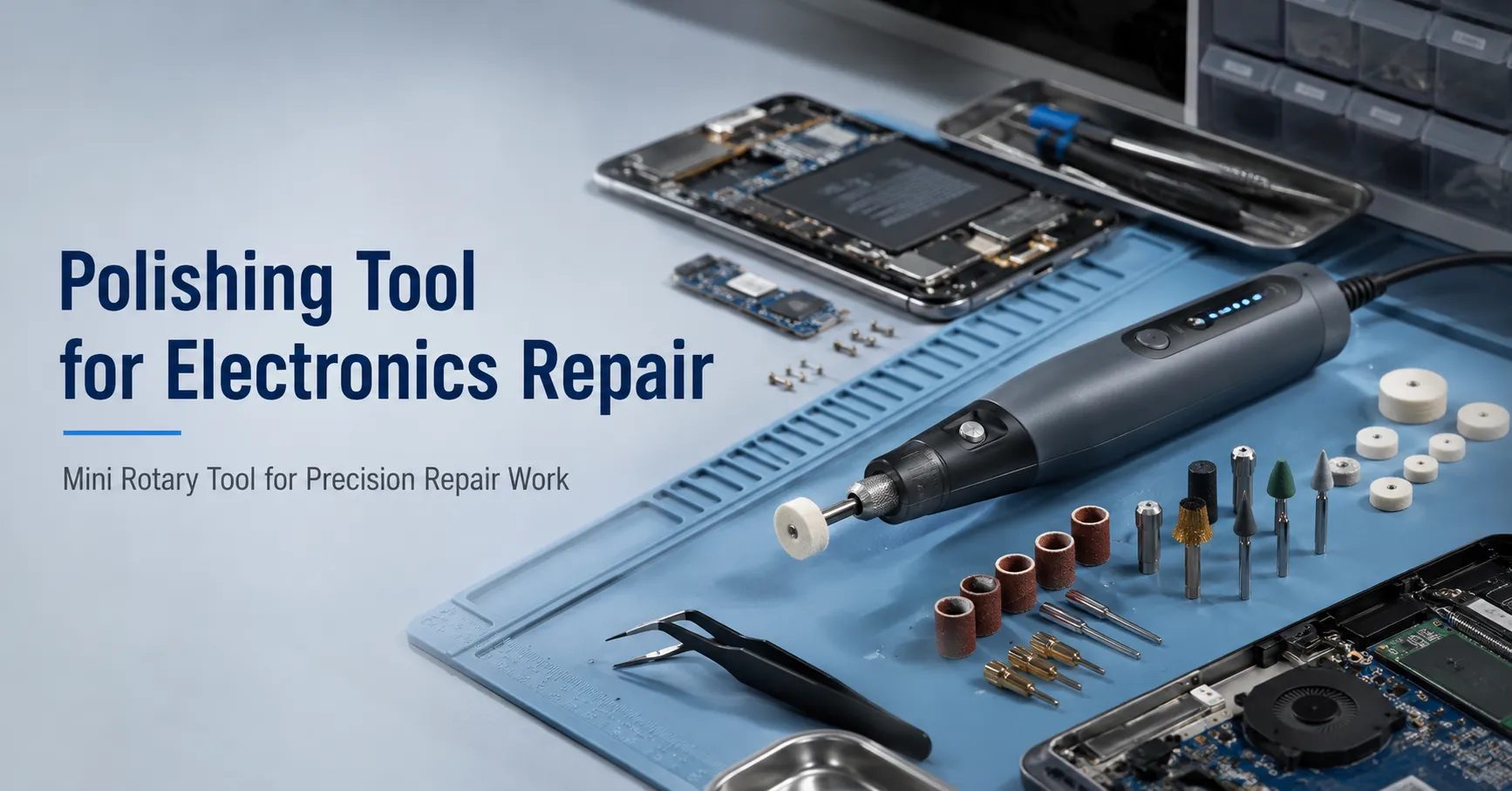
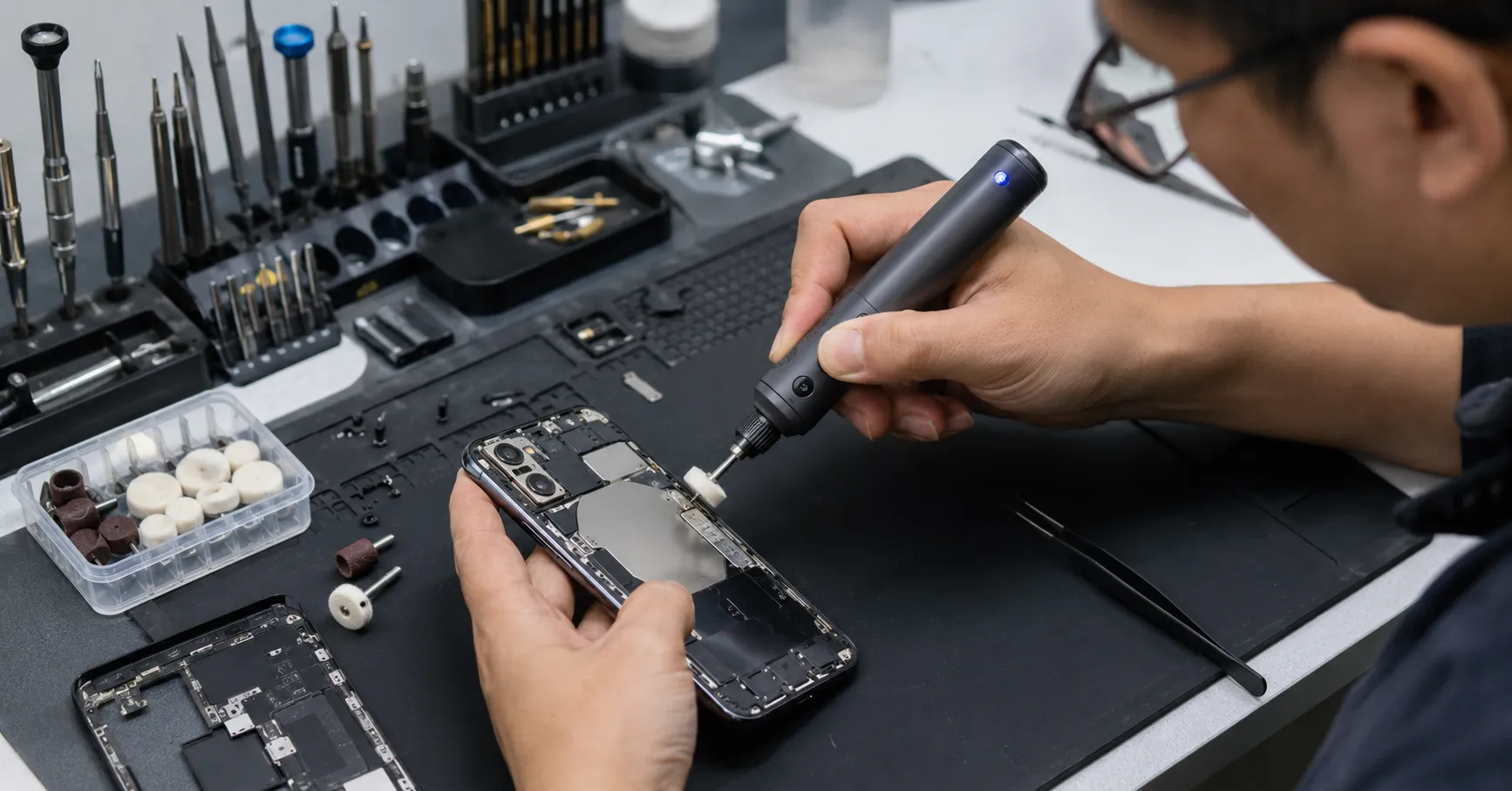
A polishing tool for electronics repair is used for small, controlled finishing work on electronic devices, circuit board areas, connectors, plastic housings, metal contacts, and refurbished components. Unlike heavy grinding tools, electronics repair tools must be compact, stable, and easy to control in tight workspaces.
For repair shops, distributors, tool brands, and e-commerce sellers, the product must do more than look compact. Buyers need to check RPM stability, polishing accessory quality, motor vibration, battery life, charging reliability, packaging strength, and factory QC before placing bulk orders.
ToolQeen supports OEM/ODM repair tool manufacturing, electric rotary tool production, precision repair tool kits, packaging customization, custom logo service, sample requests, and bulk order support. To understand ToolQeen’s factory background and production capability, visit our About Us page.
Quick Answer
The best polishing tool for electronics repair should be lightweight, low-vibration, easy to hold, and equipped with suitable polishing heads for small electronic parts. Buyers should check RPM range, motor stability, accessory fit, battery capacity, charging cycles, packaging protection, MOQ, OEM customization, and factory QC before confirming bulk production.
Why Electronics Repair Professionals Need a Polishing Tool
Electronics repair is not only about removing screws or replacing parts. Many repair tasks require surface cleaning, light polishing, oxidation removal, edge smoothing, and small-area finishing.
A compact polishing tool can help technicians work on:
- Oxidized charging contacts
- Small metal connectors
- Plastic housing edges
- Refurbished phone frames
- Laptop ports and small brackets
- Camera and drone components
- Smartwatch parts
- Game console repair parts
- Small circuit board repair areas
For distributors and private-label brands, a mini rotary polishing tool can be sold as a standalone product or included in a complete electronics repair tool kit. Buyers who want to compare available repair tools can browse ToolQeen’s Products page.
Recommended For
- Electronics repair shops
- Phone refurbishment centers
- Laptop repair teams
- Game console repair shops
- Tool distributors
- Amazon and Shopify sellers
- OEM/ODM tool brands
- Industrial maintenance suppliers
Not Recommended For
- Heavy metal grinding
- Large woodworking polishing
- High-pressure industrial sanding
- Automotive body polishing
- Jobs requiring large rotary grinders
Common Problems with Low-Quality Polishing Tools
A low-cost polishing tool may work during a short sample video, but problems often appear after daily repair use or bulk shipment.
1. Unstable RPM
If RPM is unstable, the polishing result becomes uneven. For electronics repair, users need controlled speed rather than excessive power.
2. Excessive Vibration
Strong vibration makes the tool difficult to control. It can also increase technician fatigue during repeated polishing work.
3. Poor Accessory Fit
Loose polishing heads or low-quality collets may cause wobbling. This affects precision and can damage small electronic parts.
4. Weak Battery Performance
If the battery drops quickly, repair technicians need to recharge too often. This slows down work and reduces user satisfaction.
5. Low-Grade Polishing Heads
Accessories such as felt wheels, rubber points, sanding drums, and small grinding heads must match the repair task. Poor accessories wear quickly or create inconsistent results.
6. Packaging Damage During Shipping
For e-commerce sellers and distributors, damaged storage boxes, loose accessories, or cracked trays can cause negative reviews even if the tool still works.
How to Choose a Polishing Tool for Electronics Repair
When choosing a polishing tool for electronics repair, buyers should check both product performance and factory supply capability.
Product Checklist
- Is the RPM range suitable for small electronics repair?
- Does the tool offer stable speed under light pressure?
- Is the motor vibration low enough for precision work?
- Are polishing heads, sanding accessories, and collets firmly fitted?
- Is the body slim and comfortable for detailed work?
- Is the battery capacity suitable for daily repair use?
- Does the tool support convenient charging, such as Type-C?
- Are accessories organized in a secure storage case?
- Has the product passed lifespan testing?
- Is the packaging strong enough for export shipping?
Supplier Audit Checklist
- Can the supplier provide samples before bulk order?
- What is the MOQ for standard and OEM models?
- Can the factory customize logo, color, packaging, manual, and accessory combinations?
- Is motor speed checked during production QC?
- Are battery, charging, and accessory fit tested before packing?
- Does the supplier conduct drop testing and packaging inspection?
- What is the standard production lead time?
- Can the supplier support repeat orders with consistent quality?
Best Features to Look For
Stable RPM Control
A reliable polishing tool should provide stable RPM for delicate surface work. Electronics repair often requires light polishing and cleaning, so buyers should avoid tools that are difficult to control at lower speeds.
Low Vibration Motor
Low vibration helps technicians polish small parts more accurately. It also reduces hand fatigue during long repair sessions.
Compact Body Design
A slim, pen-style body is easier to use around small parts, ports, connectors, and tight repair spaces. Weight balance also matters because technicians may use the tool repeatedly during refurbishment work.
Suitable Polishing Accessories
A complete electronics repair polishing kit may include felt wheels, small sanding drums, rubber polishing points, metal brushes, and fine grinding heads. The accessory mix should match the target market.
Reliable Battery and Charging
Battery capacity, charging cycles, and stable power output should be checked before bulk order approval. Type-C charging is useful for retail users because it is convenient and widely available.
Secure Storage and Packaging
A good kit should keep the tool and accessories organized. For export orders, packaging inspection helps reduce loose accessories, scratched tools, damaged boxes, and return risk.
Comparison Table: Manual Polishing vs Electric Mini Rotary Tool
| Item | Manual Polishing Tool | Electric Polishing Tool for Electronics Repair |
|---|---|---|
| Work Speed | Slow for repeated jobs | Faster for daily repair and refurbishment |
| Surface Control | Depends on hand pressure | More consistent with stable RPM |
| Fatigue Level | Higher during long use | Lower with proper weight balance |
| Best Use | Occasional cleaning | Repair shops and refurbishment centers |
| Accessory Options | Limited | Felt wheels, sanding drums, brushes, polishers |
| B2B Selling Value | Basic accessory | Higher-value repair tool kit |
| OEM Options | Usually limited | Logo, color, packaging, accessory layout |
Pros and Cons
Pros
- Helps clean and polish small electronic parts
- Improves efficiency in repair and refurbishment work
- Supports multiple accessories for different tasks
- Suitable for phone, laptop, camera, drone, and console repair
- Can be sold as part of an electronics repair tool kit
- Supports custom logo service and packaging customization
Cons
- Not suitable for heavy grinding work
- Poor RPM control can affect finishing quality
- Low-grade accessories wear quickly
- Strong vibration can reduce precision
- Packaging must be tested for export shipping
Buying Mistakes to Avoid
Mistake 1: Choosing Only by RPM
A higher RPM is not always better. Electronics repair needs controlled speed, stable rotation, and low vibration. Excessive speed can make the tool harder to manage.
Mistake 2: Ignoring Accessory Quality
Accessories decide how the tool performs in real repair work. Buyers should test felt wheels, polishing tips, sanding heads, brushes, and collet fit before confirming mass production.
Mistake 3: Not Testing Vibration
A sample may look good in photos, but vibration can be felt only during use. Always test the tool on small parts before approving bulk orders.
Mistake 4: Overlooking Packaging
Repair tool kits often contain many small accessories. If the tray is weak or the box is loose, parts may move during shipping and arrive damaged.
Mistake 5: Confirming OEM Details Too Late
Logo method, color, manual language, accessory layout, barcode, storage case, and carton marks should be confirmed before production starts.
OEM/ODM Buying Tips for Tool Brands
For tool brands, distributors, and e-commerce sellers, OEM/ODM support helps create a more market-ready polishing tool kit.
ToolQeen supports OEM/ODM repair tool manufacturing for mini rotary tools and precision repair tool kits, including sample request, custom logo service, accessory configuration, packaging customization, and bulk order support.
OEM Options Buyers Can Request
- Logo printing or laser engraving
- Custom housing color
- Retail box design
- Manual and label customization
- Accessory quantity adjustment
- Polishing head combination
- Storage case customization
- Barcode and SKU label support
- Export carton customization
ODM Options Buyers Can Discuss
- New product appearance
- Different RPM settings
- Battery capacity adjustment
- Charging interface design
- Accessory tray structure
- Market-specific repair kit layout
- Packaging design for retail or e-commerce
If you need sample confirmation, packaging customization, custom logo service, or bulk order support, you can send your requirements through the Contact Us page.
Factory Qualification Comparison
| Audit Item | Reliable Supplier | Risky Supplier |
| Sample Support | Provides samples before bulk order | Pushes bulk order without testing |
| RPM QC | Checks speed stability | No clear speed inspection |
| Accessory Fit | Tests collet and accessory tightness | Uses low-grade accessories without specs |
| Battery Testing | Checks charging and runtime | Only checks appearance |
| Vibration Control | Tests working stability | Does not test user handling |
| Packaging | Offers export packaging inspection | Uses weak boxes or loose trays |
| Lead Time | Gives clear production schedule | Gives vague delivery dates |
| OEM Support | Confirms logo, color, manual, box | Handles details late |
Recommended Applications
A polishing tool for electronics repair is commonly used for:
- Phone refurbishment
- Laptop repair
- Camera repair
- Drone maintenance
- Game console repair
- Smartwatch repair
- Connector cleaning
- Contact polishing
- Plastic edge smoothing
- Small metal part finishing
- Electronics repair bench maintenance
For distributors, the product can be sold as a compact polishing tool, electric rotary tool, or part of a complete electronics repair tool kit.
Key Takeaways
- Electronics repair needs controlled polishing, not heavy grinding.
- Stable RPM and low vibration are more important than maximum speed.
- Accessory quality affects real repair performance.
- Packaging inspection matters for e-commerce and export orders.
- OEM buyers should confirm samples, MOQ, accessory layout, logo, QC process, and lead time before bulk orders.
- ToolQeen can support custom mini rotary polishing tools through sample requests, packaging customization, and bulk order production.
FAQ
1. What is a polishing tool for electronics repair used for?
A polishing tool for electronics repair is used for small-area cleaning, oxidation removal, connector polishing, plastic edge smoothing, and light refurbishment work. It is commonly used on phones, laptops, cameras, drones, game consoles, and other compact electronic devices.
2. What RPM is suitable for electronics repair polishing?
Electronics repair usually needs stable and controllable RPM rather than maximum speed. Buyers should test the tool at different speed levels to ensure it can polish small parts smoothly without excessive vibration, slipping accessories, or surface damage during detailed repair work.
3. Is a mini rotary tool good for phone refurbishment?
Yes, a mini rotary tool can be useful for phone refurbishment when it has stable RPM, low vibration, suitable polishing heads, and good accessory fit. It can help clean contacts, polish small metal areas, smooth plastic edges, and support detail repair work.
4. What accessories should be included in an electronics polishing kit?
A useful kit may include felt polishing wheels, rubber polishing points, sanding drums, fine grinding heads, small brushes, and collets. The best accessory mix depends on the target users, such as phone repair shops, laptop technicians, or electronics refurbishment centers.
5. Should distributors request samples before bulk orders?
Yes. Samples allow distributors to test RPM stability, vibration, accessory fit, battery life, charging reliability, packaging strength, and user experience. This is especially important for private-label orders where tool performance and retail presentation both affect customer satisfaction.
6. Can ToolQeen customize polishing tools for OEM brands?
Yes. ToolQeen supports custom logo service, packaging customization, accessory configuration, color options, sample requests, and bulk order support. Buyers can discuss OEM/ODM polishing tool kits for electronics repair shops, distributors, e-commerce sellers, and private-label tool brands.
7. What causes poor polishing results in electronics repair?
Poor results may come from unstable RPM, excessive vibration, worn accessories, loose collets, low-grade polishing heads, or using the wrong accessory for the material. Buyers should test the tool on real repair parts before confirming mass production.
8. How can buyers reduce shipping damage for polishing tool kits?
Buyers should request secure inner trays, accessory separation, packaging inspection, export cartons, and drop testing. Polishing kits often contain many small accessories, so organized packaging is important for reducing lost parts, scratched tools, and damaged retail boxes.
For more sourcing, customization, and order-related questions, visit ToolQeen’s FAQ page.
Conclusion
A reliable polishing tool for electronics repair should help technicians clean, polish, and finish small electronic parts with control. For B2B buyers, the right choice depends on RPM stability, vibration control, accessory quality, battery performance, packaging strength, and factory QC.
If you are sourcing polishing tools for repair shops, distributors, e-commerce stores, or your own tool brand, ToolQeen can support sample requests, OEM packaging, custom logo service, mini rotary tool production, and bulk order delivery.
Contact ToolQeen to discuss your electronics repair polishing tool requirements, MOQ, packaging design, target market, and sample testing plan. You can submit your project details through our Contact Us page.